

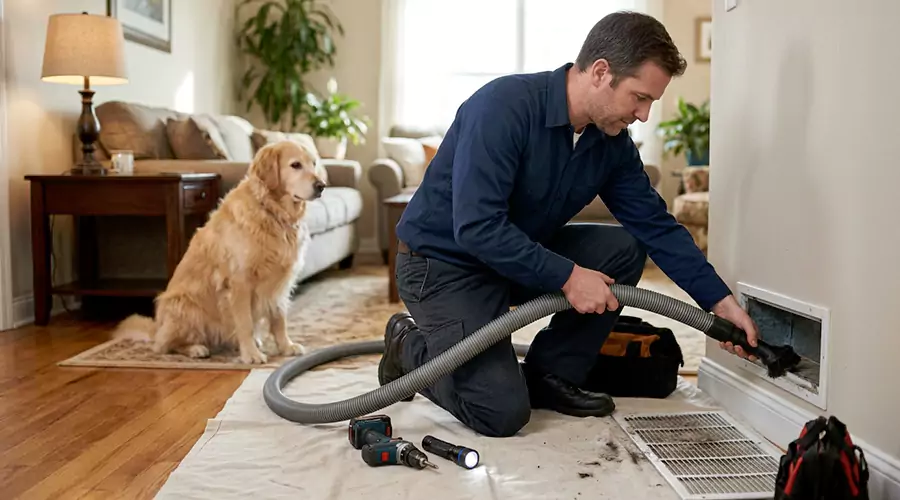
Yes, professional air duct cleaning can remove accumulated pet hair, dander, and dust from HVAC duct surfaces when these materials are present in significant amounts. However, duct cleaning cannot eliminate all pet allergens from a home or guarantee relief from allergies. Pet-related particles also accumulate on carpets, furniture, bedding, and other household surfaces.
Homes with dogs and cats often contain more visible hair and dander than homes without pets. Some particles become airborne during grooming, cleaning, or normal household movement. When the heating and cooling system operates, a portion of these materials may enter return grilles and travel toward the HVAC filter.
The amount reaching the ducts depends on the home's filtration system, duct condition, and household activities. Much of the larger hair and debris may be caught by filters or settle near returns, while smaller particles can travel farther.
Understanding how professional cleaning works can help pet owners determine when the service is appropriate and which other maintenance practices may be more useful.
How Do Pet Hair and Dander Enter Air Ducts?
Forced-air HVAC systems draw indoor air through return openings and move it toward the air handler or furnace. This air can contain household dust, pet hair, and smaller particles associated with animals. A full home air duct cleaning addresses the return and supply network where that material settles.
Properly fitted filters capture a portion of the material moving through the return system. However, particles can accumulate in return ducts, particularly when filtration is inadequate or gaps allow air to bypass the filter. Pet hair may also collect around return grilles. Smaller particles can become attached to dust deposits or settle on duct surfaces.
A visible layer of hair around one return opening does not automatically mean the entire duct network is contaminated. An inspection can help establish the extent of the buildup.
What Is the Difference Between Pet Hair and Pet Dander?
Pet hair and pet dander are related but different materials. Hair is the visible fur shed by animals, while dander consists of tiny particles of shed skin. Pet allergens are proteins associated with animals, including proteins found in dander, saliva, and urine. These allergens can attach to dust, fur, and other surfaces.
| Material | Where It Commonly Collects | Can Duct Cleaning Remove It? |
|---|---|---|
| Loose pet hair | Floors, furniture, return grilles | Yes, when present in ducts |
| Deposited pet dander | Dust, fabric, duct surfaces | Deposits can be removed |
| Pet allergen-containing dust | Bedding, carpets, ducts | Duct deposits can be removed |
| Airborne allergen particles | Indoor air | Duct cleaning does not continuously filter them |
| Pet hair trapped in HVAC filters | Filter media | Replace or maintain the filter |
| Allergens on furniture and carpets | Household surfaces | Require separate cleaning |
Removing deposited material from ducts does not remove every allergen source. Pets continue shedding particles, and household activities can redistribute material into the air.
How Does Professional Duct Cleaning Remove Pet Hair?
Professional air duct cleaning typically combines mechanical agitation with negative-pressure vacuum collection. The agitation tools loosen accumulated material, while vacuum equipment captures debris from the duct network. The National Air Duct Cleaners Association (NADCA) describes this approach as source-removal cleaning.
Technicians may access supply ducts, return ducts, plenums, and other included HVAC components. The tools used should match the duct materials because flexible liners and fiberglass duct board can be damaged by inappropriate cleaning equipment. A suitable process removes deposited hair and dust without unnecessarily releasing particles into occupied rooms.
Can Air Duct Cleaning Remove Pet Dander Completely?
No. Cleaning can remove dander-containing deposits inside the HVAC system, but it cannot eliminate all animal allergens from the building. The American Academy of Allergy, Asthma & Immunology's practice guidance states that duct cleaning has not been proven to reduce exposure to furry-animal allergens. It does not recommend cleaning ducts specifically as an allergen-avoidance treatment.
This distinction is important when evaluating advertising claims. A company may appropriately describe its ability to remove deposited material but should not promise complete allergen elimination. Household allergen management requires attention to multiple surfaces and sources, not only duct interiors.
Does Air Duct Cleaning Help With Pet Allergies?
The potential benefit depends on the condition of the ducts and the individual's exposure. Removing substantial contamination may be appropriate, but research does not establish reliable allergy improvement from routine duct cleaning. The Environmental Protection Agency (EPA) states that duct cleaning has not been demonstrated to prevent health problems. Indoor allergens can also originate from bedding, upholstered furniture, carpets, and direct contact with animals.
If someone experiences persistent allergy or asthma symptoms, they should consult an appropriate healthcare professional. Duct cleaning should be considered for documented duct contamination rather than marketed as a medical treatment.
When Should Pet Owners Consider Air Duct Cleaning?
Pet ownership alone does not establish the need for professional cleaning. The EPA recommends cleaning residential ducts when specific conditions justify it.
An inspection may be appropriate when:
- Large deposits of pet hair are visible inside return ducts.
- Significant debris appears to be entering rooms from supply registers.
- Ducts contain heavy accumulations of household dust.
- An inadequate filter arrangement has allowed debris to bypass filtration.
- Significant contamination remains after a renovation or another unusual event.
- Pest activity or moisture problems are also present.
Not every finding requires complete duct cleaning. A dirty filter may simply need replacement, while damaged ducts may need repair. The contractor should show evidence of contamination before recommending extensive work.
How Often Should Air Ducts Be Cleaned in Homes With Pets?
There is no universal cleaning interval for homes with dogs or cats. Some cleaning companies suggest evaluating ducts every few years, but the EPA does not recommend routine cleaning on a fixed schedule. Households with heavy shedding may benefit from more frequent inspection of filters and return grilles. However, inspection and cleaning are different activities.
A home with several pets and properly maintained filtration may have relatively little duct contamination. Another home with filter bypass or significant deposits may need professional attention sooner. The decision should follow the actual condition of the system.
What Is the Best HVAC Filter for Pet Hair and Dander?
A suitable HVAC filter can capture particles moving through the system during operation. Filter efficiency is commonly described using the Minimum Efficiency Reporting Value (MERV). The EPA recommends choosing a filter rated MERV 13, or the highest rating the HVAC system can accommodate. A qualified technician can help determine whether a filter upgrade would create excessive airflow resistance.
The filter must also fit securely. Gaps around its edges can allow dust and pet particles to bypass the media. A higher-rated filter is not automatically suitable for every older system. Compatibility and maintenance are important.
Can Air Purifiers Help Reduce Pet Dander?
Portable air cleaners equipped with appropriate high-efficiency particle filters can capture some airborne pet allergen particles. They may be useful in bedrooms or living areas where occupants spend substantial time. However, larger allergen-containing particles can settle onto surfaces before reaching an air cleaner. Regular household cleaning remains necessary. Choose a portable cleaner with a suitable clean air delivery rate for the room. The EPA also recommends avoiding devices that intentionally produce ozone because ozone is a lung irritant. Air cleaners complement filtration and cleaning but do not eliminate the source of pet allergens.
How Can You Reduce Pet Hair in HVAC Ducts?
Preventive maintenance can reduce the amount of material entering the duct network. The most useful actions focus on filtration, cleaning, and keeping the return system in good condition.
Consider these practices:
- Check HVAC filters regularly and replace them as needed.
- Vacuum return grilles and nearby surfaces.
- Groom pets appropriately to manage loose hair.
- Vacuum carpets and upholstery using suitable equipment.
- Wash pet bedding regularly.
- Keep return air pathways unobstructed.
- Repair significant return duct leaks.
- Address gaps that allow air to bypass the HVAC filter.
These measures can reduce recurring deposits without requiring frequent professional duct cleaning.
What Should You Ask an Air Duct Cleaning Company?
Ask the contractor to inspect the system and show evidence of substantial pet hair or dander-containing deposits. Confirm whether the quoted service includes return ducts, supply ducts, plenums, and applicable equipment components. The company should describe its vacuum collection method and how it will protect flexible or insulated ducts. Request a written estimate and an explanation of how the cleaned surfaces will be inspected afterward.
Avoid contractors promising complete pet allergen removal or guaranteed allergy relief. Such claims are not supported by established duct-cleaning evidence.
Conclusion
Professional air duct cleaning can remove accumulated pet hair and dander-containing dust from HVAC passages when significant deposits are present. However, it cannot eliminate all pet allergens or guarantee improvements in allergy symptoms. Maintaining suitable HVAC filters, cleaning household surfaces, and correcting duct problems are important steps for pet owners. Before scheduling duct cleaning, inspect the system and confirm that contamination justifies the service.